.svg)
Choose Tromsø as the easier base for northern lights trips, winter whales and straightforward logistics, and Lofoten for dramatic coastline, fishing villages and photography. With six days or more, combine them: three nights in Tromsø, then two or three in Lofoten.
Our Private Norway Winter Tour follows this pattern, with private transfers and domestic flights between the stops. See also Tromsø or Lapland for the northern lights.
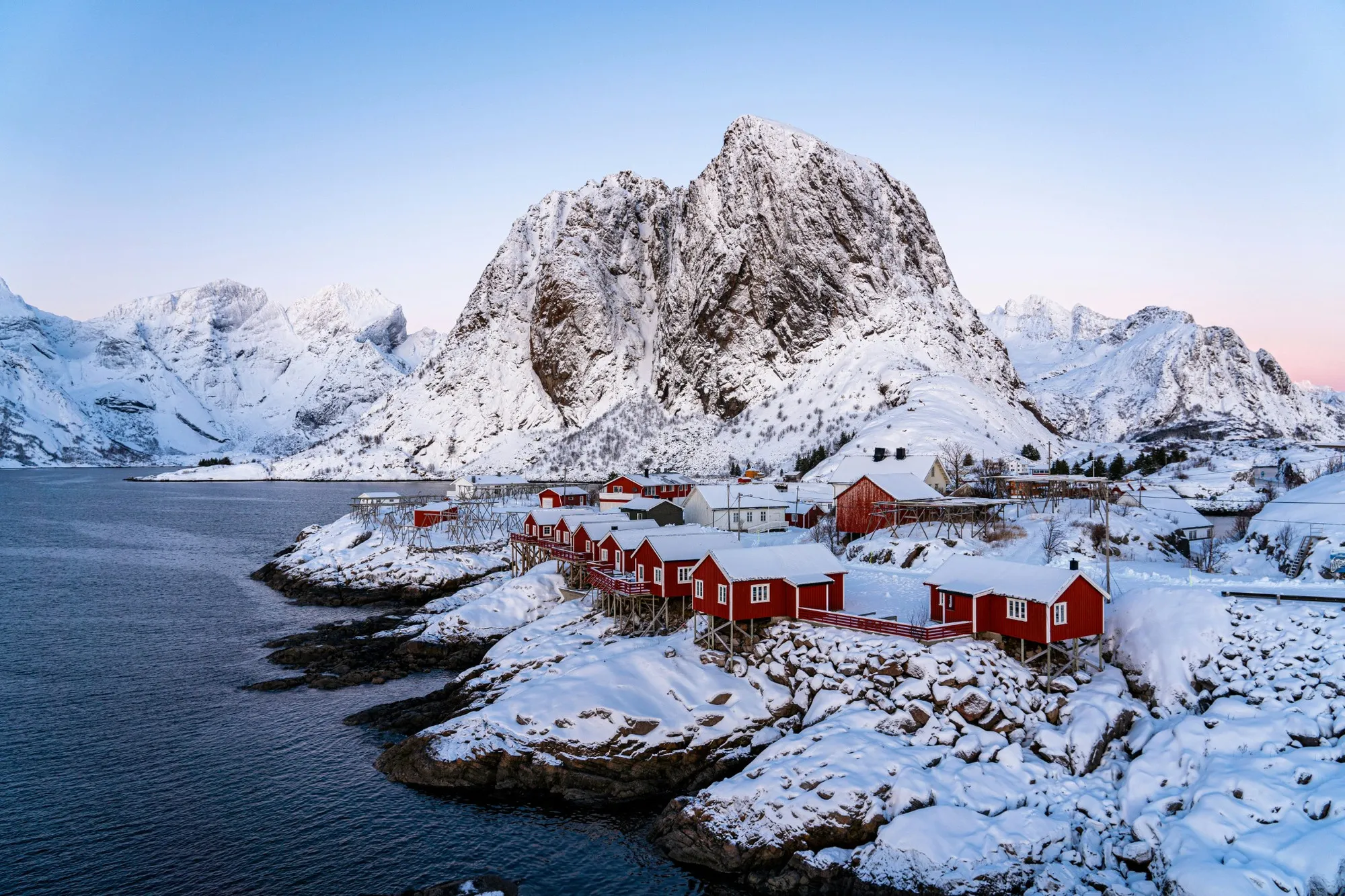
Tromsø and Lofoten are two very different ways to experience Arctic Norway in winter, and the best answer for most guests is to see both. Tromsø is the Arctic city: northern lights hunts, whales in the fjords, dog sledding and reindeer, with the easiest flights. Lofoten is the coast: jagged peaks rising straight from the sea, fishing cabins, small villages and winter light that photographers travel for.
With six days or more, combine them. Our Private Norway Winter Tour spends three nights in Tromsø and two in Svolvær in Lofoten before continuing to Bergen and Oslo, with private transfers and domestic flights between the stops. It is a starting point, and we adapt the order, pace and experiences to the guests.
The short answer: which one should you choose?
Choose Tromsø if the northern lights are the main reason for the trip, if you want huskies, reindeer and, in season, whales from a comfortable hotel base, or if you have only four or five days.
Choose Lofoten if you want scenery, photography and a quieter, more remote feel, and you are happy with a slower rhythm. Weather decides more here, so it works best with a flexible private plan.
Choose both if you have six days or more. Tromsø gives the Arctic activities and the easiest start, and Lofoten gives the landscape that stays with you.
Tromsø in winter: what to expect
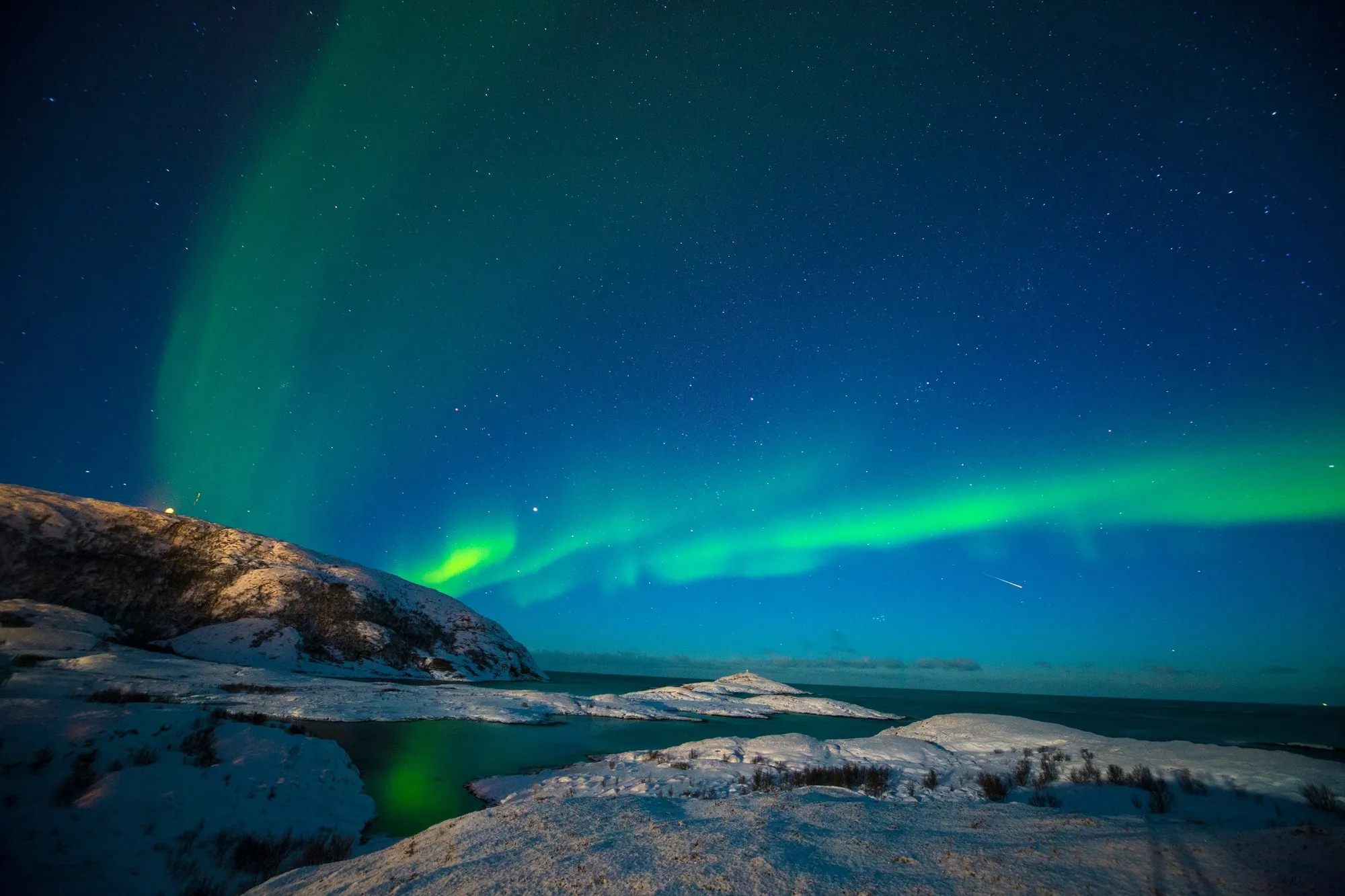
Tromsø sits in the auroral zone, and Visit Tromsø says the lights can be seen from late August to early April. It is also a working Arctic city, so there are restaurants, galleries and a cable car alongside the wilderness. Visit Tromsø puts the average winter temperature at around −4°C, and the Gulf Stream keeps the coast milder than many places at the same latitude.

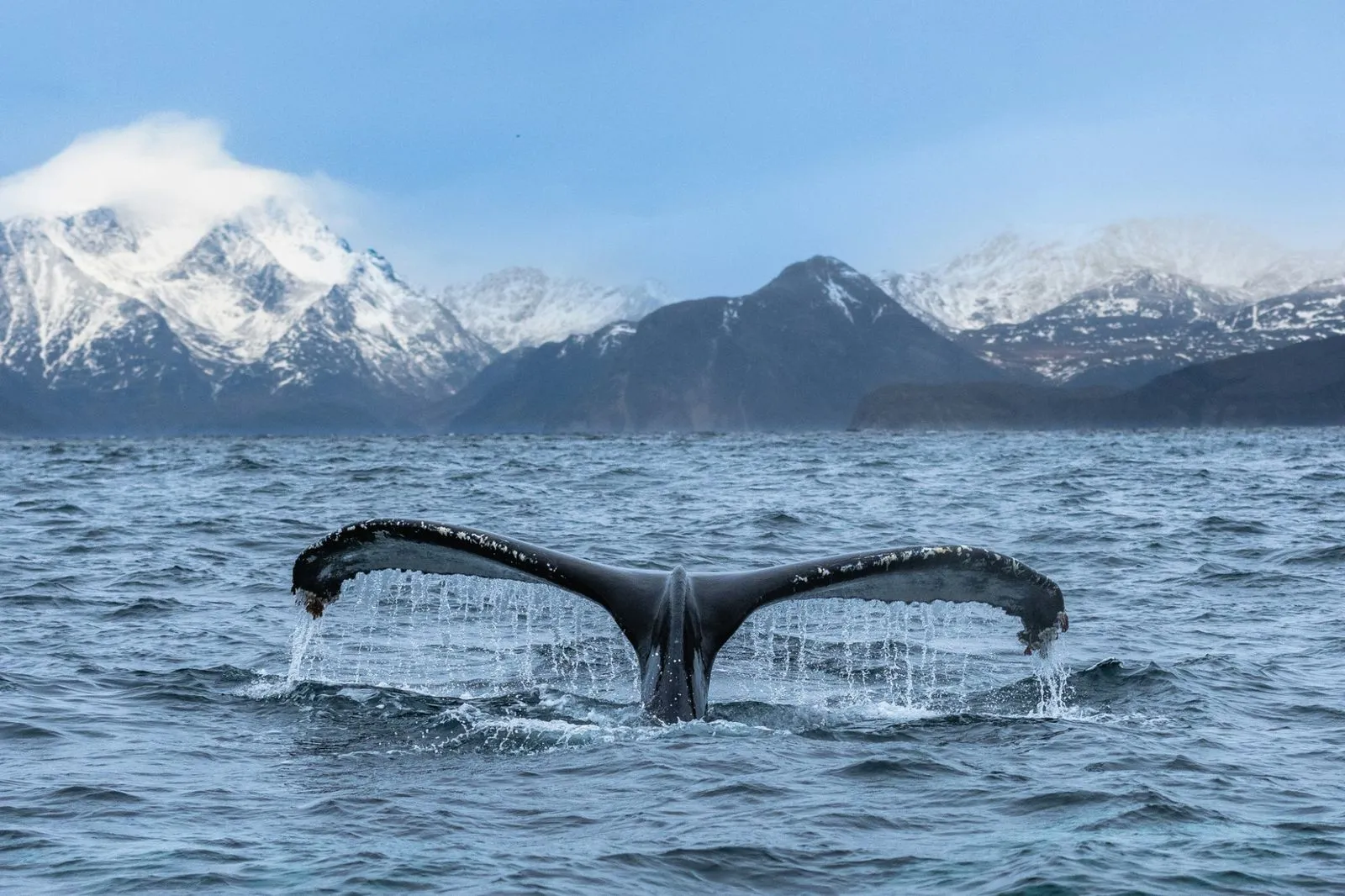
The sun stays below the horizon from late November into January, although the sky still glows pink, purple and deep blue around midday. Whales gather in the fjords to feed on herring, and guided whale watching runs from November to January. Visit Tromsø says tours mostly run around Skjervøy and Kvænangen and that sightings depend on where the herring are, so a whale day is usually a full day out from the city. Dog sledding tours cross the landscape, for example on Kvaløya, and reindeer sledding is often paired with a traditional meal in a Sámi tent. Winter is peak season, and Visit Norway notes that Tromsø has become very busy, so we recommend booking private guides and the best hotels well ahead.
Lofoten in winter: what to expect
Lofoten is an island chain of fishing villages, steep mountains and sea, reached along the E10 road. The Gulf Stream moderates the climate, so winter temperatures often range from −5°C to 3°C, according to Visit Norway. The weather is changeable: storms are frequent, snow is heavier higher up, and the real winter, with more snow at sea level, usually runs from January to mid-March.
The sun stays below the horizon for roughly four to six weeks around the turn of the year, but clear days still bring a few hours of soft light and long blue hours at dawn and dusk. By February the days are noticeably longer.
Winter here is for people who like the elements. Visit Norway lists snowshoeing, dog sledding, horse riding, winter kayaking and guided ski touring. Boat and RIB safaris into Trollfjord, where white-tailed eagles can be seen, are a highlight, and fishing trips for skrei, the migrating cod, are offered when the fish arrive to spawn, mainly in February and March, weather permitting. Henningsvær, Nusfjord and Reine are popular in winter, and rorbuer, the traditional fishermen's cabins, and hotels are available, although some close for the season. Some museums and businesses also shorten their hours in winter, so a local plan matters.

Northern lights: Tromsø or Lofoten?
Both are good, and Visit Norway lists Lofoten as a popular aurora destination, often combined with a visit to Vesterålen. Tromsø is the main hub for aurora trips, with the easiest access. Lofoten offers a more dramatic foreground: the beaches on the north coast of Vestvågøy, reached from the E10 road, put the lights over mountains and sea. Visit Lofoten suggests Uttakleiv when activity is low to moderate, and Haukland or Vik when activity is high.
In both places, clear sky matters more than the forecast figure. Visit Lofoten advises not to worry too much about the KP index and to look for clear skies. A guide who knows the beaches, or the roads inland from Tromsø, can be a few minutes from the next gap in the cloud, which is why we arrange private vehicles and local guides. Our comparison of Tromsø and Finnish Lapland looks at the aurora in more detail.
The Private Norway Winter Tour includes a private northern lights hunt in Tromsø on the third night, and in Lofoten we can add a guided aurora evening on the north-coast beaches, which are more than an hour's drive from Svolvær and closer to Leknes.
Weather, daylight and winter roads
Lofoten's weather is changeable, and its roads call for experience. Visit Norway says winter driving in Lofoten requires experience of ice and snow, and recommends public transport otherwise. More generally, it advises against winter driving without that experience and suggests a car with a driver. A private driver and local guide take the pressure off: you look at the scenery, and they handle the road, the stops and the timing.
Small Arctic airports can be disrupted by weather, so a good plan avoids tight connections. We build buffers around the Lofoten flights, so a delayed departure does not put your onward journey at risk.
How to get from Tromsø to Lofoten
The easiest way is to fly. Widerøe connects Tromsø with Lofoten's airports at Svolvær and Leknes, directly on some days and via Bodø on others. Schedules change with the season, so we confirm the best routing for your dates. Svolvær is the choice for eastern Lofoten, and Leknes suits the western beaches and villages. We arrange a private transfer at each end, and a meet and greet on arrival.
Driving is possible: it is about 420 to 430 km from Tromsø to Svolvær by road, around six and a half to seven hours in good conditions before stops, and snow, ice and fast-changing visibility can add much more in winter. There is no railway to Tromsø or in Lofoten. The coastal voyage on Hurtigruten or Havila connects the two by sea in around 17 hours and suits guests who value the journey itself.
How many days do you need for Tromsø and Lofoten?
Three nights in Tromsø and two in Lofoten is a comfortable minimum, which makes a six-day trip once you add arrival and departure. Three nights in Tromsø give you several evenings for the lights, plus whale watching, huskies or reindeer by day. Two nights in Lofoten give you one full day for a private sightseeing tour, and a third night is worth adding if you want a boat day or a photography morning.
Our ten-day Private Norway Winter Tour uses this pattern and then continues south to Bergen for a fjord day through Nærøyfjord, Flåm and Stegastein, and to Oslo for a private city tour. If you would like to start in Finnish Lapland, the 11-day Private Lapland to Lofoten Winter Tour adds Rovaniemi, Levi and Kirkenes before Tromsø and Lofoten.
A sample route: six days in Tromsø and Lofoten
This is how the first six days of our Private Norway Winter Tour are shaped. It shows how the two places fit together, and every part can be rearranged.
Day 1: Arrive in Tromsø
An English-speaking guide meets you at the airport and a private transfer takes you to your hotel. The first evening is relaxed, with a king crab dinner to begin the journey.
Day 2: Huskies and reindeer
A husky safari and a reindeer sledding experience fill the day, with private transfers between them and time to rest in between.
Day 3: Whales and the northern lights
The day centres on a whale-watching expedition in season, or a fjord or fishing cruise outside it. In the evening comes the private northern lights hunt, driving away from the city lights in search of clear sky.
Day 4: Tromsø to Lofoten
A guided city tour and a visit to Polaria come first. Then a private transfer takes you to the airport for the flight to Svolvær, where you are met and taken to your hotel.
Day 5: A private day in Lofoten
A private vehicle and local guide take you along the Arctic coastline, through fishing communities and beneath the winter mountains, at the pace the weather allows.
Day 6: Sea eagles, then onward
A private sea eagle safari is the morning highlight. After that the journey continues south to Bergen, where the full ten-day tour adds a fjord day.
When to go: month by month
November to January: whale season around Tromsø, and the polar night, when the sky glows around midday. Lofoten is at its darkest, with frequent storms, and suits guests who want a true Arctic winter.
January to mid-March: Lofoten's real winter, with more snow at sea level and lengthening days. Skrei fishing is mainly in February and March.
March: Visit Norway notes that March and April are statistically among the most active aurora periods, with far more daylight than midwinter. In Lofoten, Visit Lofoten says the season fades by mid-April as the nights grow too bright.
Frequently asked questions
Is Lofoten or Tromsø better in winter?
Tromsø is the easier base for northern lights trips, winter whales and straightforward logistics. Lofoten has the more dramatic backdrop, with quiet fishing villages. If you have six days or more, do both rather than choosing.
Can you see the northern lights in Lofoten?
Yes. Visit Lofoten says the lights can be seen for much of the year outside the bright summer months, from late August into spring. The beaches on the north coast are the classic viewpoints.
How far is Tromsø from Lofoten?
It is about 420 to 430 km by road to Svolvær, around six and a half to seven hours in good conditions and longer in snow. Most guests fly with Widerøe to Svolvær or Leknes, directly or via Bodø, and take a private transfer from the airport.
Is it safe to drive in Lofoten in winter?
It is possible, but it requires experience of ice, snow and changing weather. Visit Norway recommends public transport for those without it. A private driver and guide are the comfortable alternative.
How many nights do I need in Lofoten?
Two nights give you one full day of sightseeing. Three nights are better if you want a boat safari or time for photography, because the weather can change the plan for a day.
What is the best month for Tromsø and Lofoten?
February and March combine more daylight, Lofoten's real winter and an active aurora season. For whales and the deepest polar night atmosphere, choose November to January.
Plan your Arctic Norway winter with Guidance
Every route on this page is a starting point. We adapt the order, the pace and the experiences to the people travelling. Send us a few details through our trip request form, and we will propose a private plan, with the Private Norway Winter Tour as a reference for Tromsø, Lofoten, Bergen and Oslo.
Continue planning

At a glance
- Private Northern Lights hunt in Tromsø
- Huskies, reindeer and Arctic winter wildlife
- Private sea eagle safari in the Lofoten Islands
- Fjord day through Nærøyfjord, Flåm and Stegastein
This 10-day private Norway winter journey connects four very different parts of the country within one carefully planned route. It begins with three nights in Tromsø, giving guests time to experience Arctic Norway through huskies, reindeer, winter wildlife and a private Northern Lights hunt without changing hotels each day.
From Tromsø, the journey continues to Svolvær for two nights in the Lofoten Islands. A private sightseeing programme introduces the islands’ dramatic winter coastline, fishing communities and mountain scenery, while a private sea eagle safari adds another perspective on the Arctic landscape.
The route then turns south to Bergen for two nights. Here, private city touring is combined with a full fjord journey through Nærøyfjord, Flåm and Stegastein, creating a striking contrast between Northern Norway and the deeper fjord landscapes of the west.
The final two nights are spent in Oslo, reached with privately coordinated airport and hotel transfers. A private city tour completes the journey before departure. Across nine nights, only four hotel bases are used, balancing a wide geographical range with a comfortable overall flow.